Crate Training Your Puppy Using Force-Free Methods
Crate Training Your Puppy Using Force-Free Methods
What Is Crate Training?
Crate training is the process of teaching a puppy to feel safe, relaxed, and comfortable inside a crate. When introduced properly using force-free training methods, crates can become valuable tools for:
Toilet training
Settling
Safe management
Preventing destructive behaviour
Supporting rest and recovery
Safe travel
The key to successful crate training is ensuring the crate always predicts positive experiences.
Should You Crate Train a Puppy?
A crate should never be used as punishment.
Instead, the crate should function as:
A calm sleeping space
A safe retreat
A predictable environment
A management tool
Many puppies naturally enjoy den-like environments when introduced gradually and positively.
Choosing the Right Crate
Your puppy’s crate should:
Allow them to stand comfortably
Allow them to turn around
Allow them to lie stretched out
Feel secure but not cramped
Popular options include:
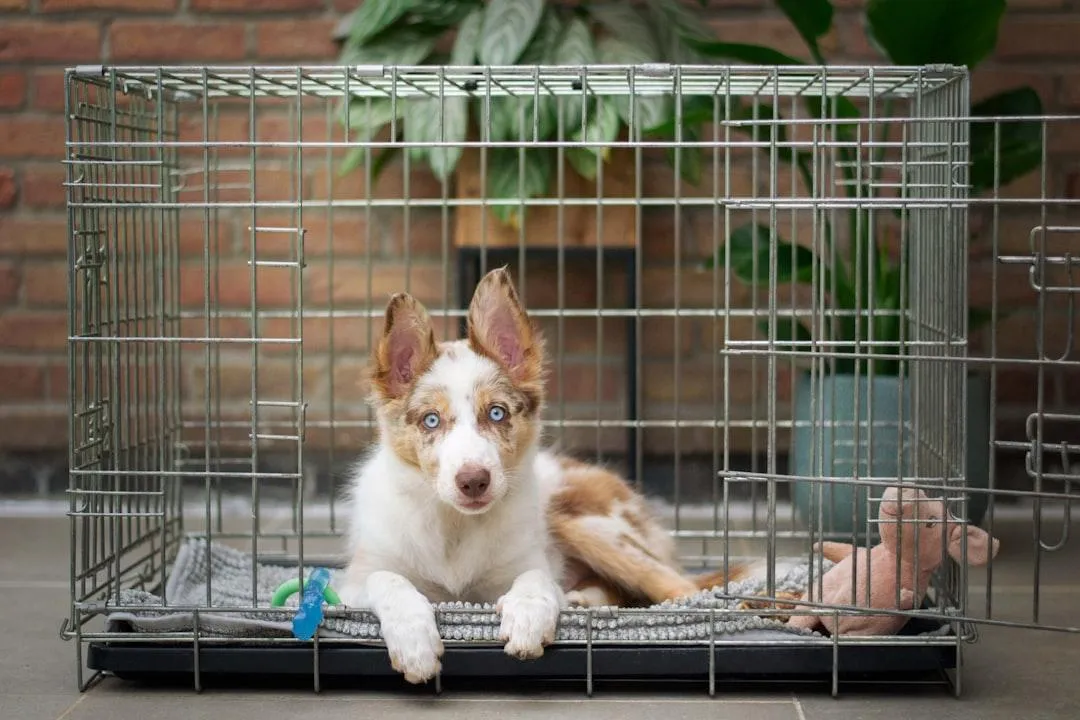
Wire crates
Plastic travel crates
Soft-sided crates
Puppy pens with open crate access
Adding soft bedding, safe chews, and enrichment can help puppies relax.
How to Introduce the Crate Positively
1. Let Your Puppy Explore Freely
Start with the crate door open.
Scatter treats inside and allow your puppy to investigate voluntarily.
Never force your puppy into the crate.
2. Feed Meals in the Crate
Feeding meals inside the crate helps create positive associations.
Initially allow the puppy to move freely in and out.
Gradually build duration over time.
3. Use Enrichment Inside the Crate
Provide:
Stuffed Kongs
Lick mats
Safe chews
Snuffle mats
These activities encourage calmness and relaxation.
4. Build Duration Gradually
Close the door briefly while your puppy enjoys enrichment.
Open the door before your puppy becomes distressed.
Gradually increase duration in tiny increments.
Common Crate Training Mistakes
Moving Too Quickly
If puppies become distressed, whining or panicking can escalate.
Slow progression creates confidence.
Using the Crate for Punishment
Punishment damages positive associations and can create fear of confinement.
Expecting Puppies to “Cry It Out”
Allowing puppies to panic inside the crate can worsen separation-related behaviours and anxiety.
Force-free training focuses on helping puppies feel emotionally safe.
Crate Training and Toilet Training
Crates can support toilet training because most puppies naturally avoid toileting where they sleep.
However, puppies still need:
Frequent toilet breaks
Supervision
Consistent routines
Realistic expectations
Young puppies may need overnight toilet trips.
Supporting Calmness and Settling
Many puppies struggle with switching off.
Teaching relaxation is just as important as teaching obedience.
Calm crate routines can help puppies learn:
Emotional regulation
Independence
Relaxation skills
Rest routines
Signs Your Puppy Is Comfortable in the Crate
Positive signs include:
Entering voluntarily
Relaxing inside
Sleeping calmly
Choosing to rest there independently
Engaging with enrichment comfortably
The goal is emotional comfort — not simply compliance.
Final Thoughts
Force-free crate training helps puppies develop positive associations with confinement while supporting toilet training, management, and relaxation.
By introducing the crate gradually and positively, owners can help puppies feel safe and secure without fear or distress.
Patience, consistency, and positive reinforcement are the foundations of successful crate training.
Are you based in Northumberland? Online tips are a great start, but hands-on feedback stops puppy frustrations much faster. Join our Perfect Puppy Classes at Acklington Village Hall.
https://college4canines.co.uk/puppy-classes-northumberland
Author
Written by Denise Devereux Bsc (Hon) Canine Behaviour, FdSc Applied Canine Behaviour & Training. Denise is an accredited force-free behaviourist currently completing her MSc in Clinical Animal Behaviour at the University of Edinburgh.